Yesterday, the UIA World Congress of Architects 2026 Barcelona officially launched in Barcelona—a global event that, every three years, sets the trajectory for real estate development and urbanism worldwide.
The XENIOS Bureau team is closely following the congress agenda. For our readers, we have prepared an in-depth analysis of the official opening ceremony. We intentionally bypassed the protocol and diplomatic formalities to extract the core strategic insights, manifestos, and economic indicators that will shape city development in the coming decade.
The Pivot Point: Why Was the Opening Held at an Abandoned Thermal Power Plant?
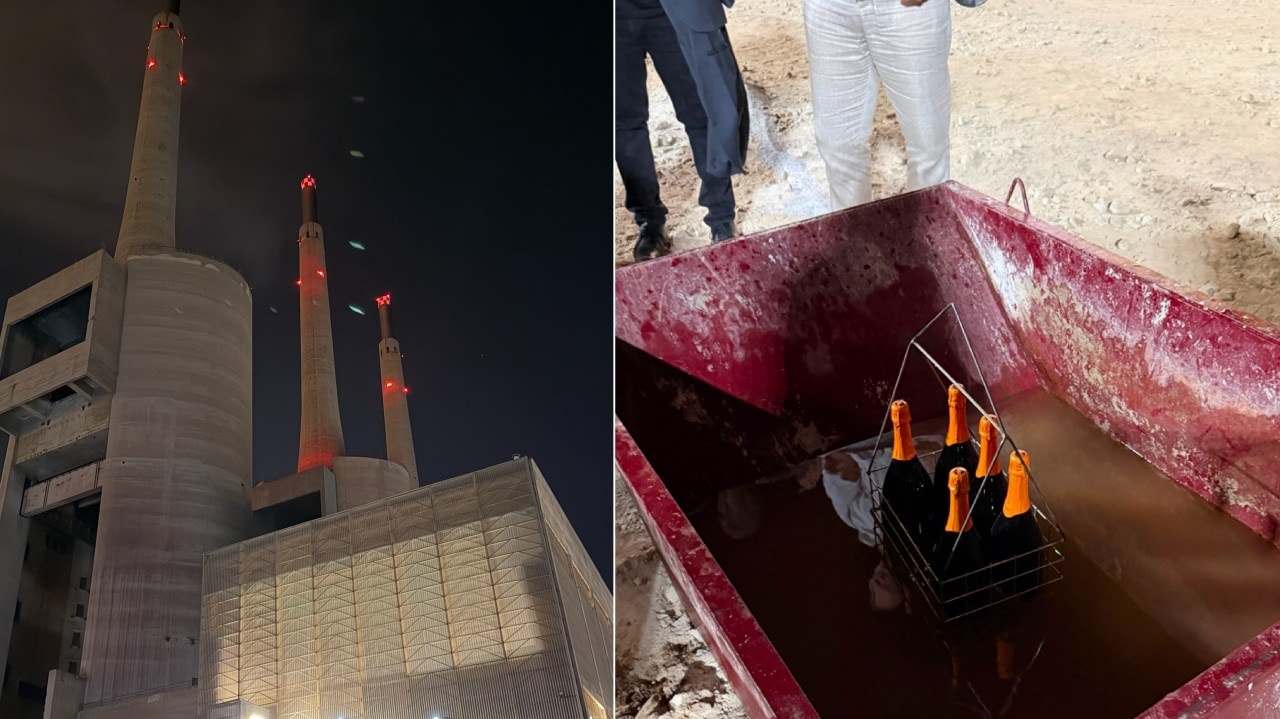
The choice of venue for the opening ceremony—Les Tres Xemeneies ("The Three Chimneys") in the suburb of Sant Adrià de Besòs—was a powerful strategic statement in itself.
This giant, decommissioned 1970s coal-fired power plant is a brutalist industrial monster occupying a prime spot on the Mediterranean coast. For decades, it powered Barcelona’s rapid modernization while polluting the air with tons of coal emissions. Today, this monument of industrial heritage is undergoing a massive process of global reprogramming, transforming into a new public space, a cultural hub, and a digital media park.
As Filo Cañete, Mayor of Sant Adrià de Besòs, highlighted in her opening address, this site is Barcelona's equivalent to London's Battersea Power Station or Tate Modern. It stands as a physical symbol of decarbonization and the transition from heavy, raw industry toward the experience economy, tactile design, and human-scale urbanism.
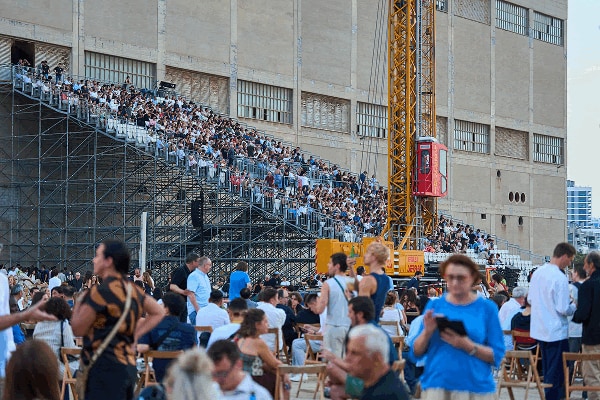
Photo credits: Anna Mas from UIA
The Core Manifesto: The Concept of "Becoming"
While the previous UIA Congress in Copenhagen (2023) was held under the banner of "leave no one behind" and focused heavily on the UN's Sustainable Development Goals, Barcelona 2026 introduces a new paradigm: "Becoming: Architectures for a Planet in Transition".
"What is today particular is the pace of the change, the uncertainty of our direction, and the capacity of technology to command instead of just serve. We realize that the planet and humanity are in danger," stated UIA President Regina Gonthier.
Global leaders at the opening ceremony acknowledged a fundamental shift: traditional, "static" development is obsolete. It is no longer viable to design a city once and for all via rigid, 50-year master plans. Today, architecture must be viewed as an ongoing, highly flexible process of adapting existing environments to rapidly emerging challenges:
- Extreme climate events (water management, severe heat islands).
- The global housing affordability crisis (particularly in major metropolitan hubs and the Global South).
- The pressure of overtourism (Barcelona is the first city in history to host the UIA Congress for a second time, 30 years after its 1996 edition, and is currently studying the social and economic friction of tourism-overheat).
- The exponential expansion of AI and automation.
10 "Blind Walls" Instead of Fancy Pavilions: Tactical Urbanism in Action
The most practical, economically sound decision of the launch was announced by Jaume Collboni Cuadrado, Mayor of Barcelona.
Typically, host cities of major global congresses spend millions building temporary exhibition pavilions—resource-heavy, showy structures that are dismantled just a week after the event ends. Barcelona decided to rewrite the rules.
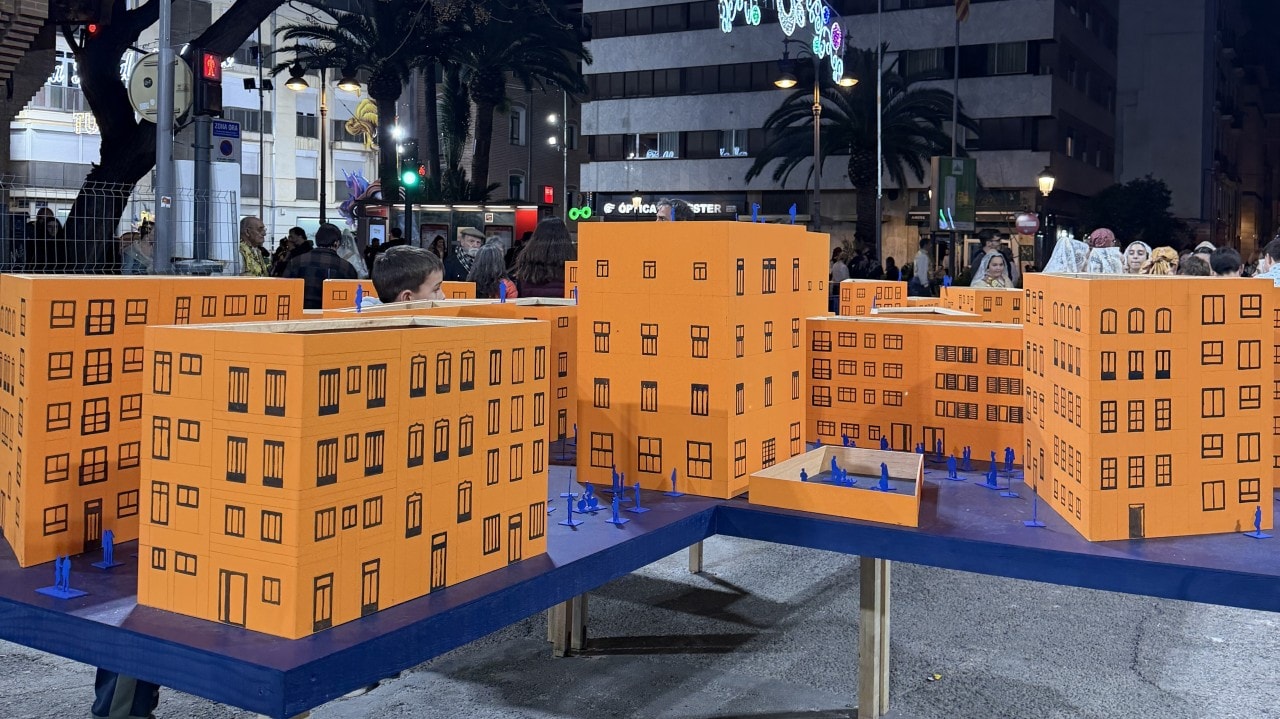
Instead of building a temporary "monument of vanity" in the tourist center, the city invested the congress's infrastructure budget into the renovation and community integration of 10 blind residential gable walls (medianeras) in working-class neighborhoods.
This is a textbook example of the tactical urbanism we advocate for at XENIOS:
- Investing in Everyday Life: Capital is channeled away from tourist-centric hotspots and directed straight into improving the environments where citizens actually live their daily lives.
- Multifunctional Design: These blind concrete walls are being insulated, greened, turned into vertical gardens, or used as canvases for local community art.
- High Social ROI: Rather than leaving behind temporary construction waste, the city secures a permanent physical legacy that serves local communities for decades.
Fragile Ground: Ethics, Compliance, and Risk Management
Iñaqui Carnicero, General Secretary for Urban Agenda and Architecture of Spain, raised a critical, existential question for the entire construction and real estate industry:
"We receive questions from the fragile ground on which we build, from the climate that is changing around us, from the homes that still remain out of reach. What are we going to do with the work we have been given?"
This message directly aligns with how XENIOS Bureau builds its consulting methodology. Modern urban development and design can no longer exist in isolation from rigorous compliance and risk management:
- Development as an "Act of Repair": Bulldozing old structures to pour new concrete is becoming an unacceptable practice. Retaining the embodied carbon of existing buildings through Adaptive Reuse is now a strict financial and ethical requirement.
- Resisting Homogenization: Joan Busquets, Honorary President of the Congress, emphasized that globalization threatens to make all cities look identical. The job of a modern urban strategist is to provide a "critical response" to this trend by excavating, protecting, and monetizing unique local identity (what we call the Code of the Territory).
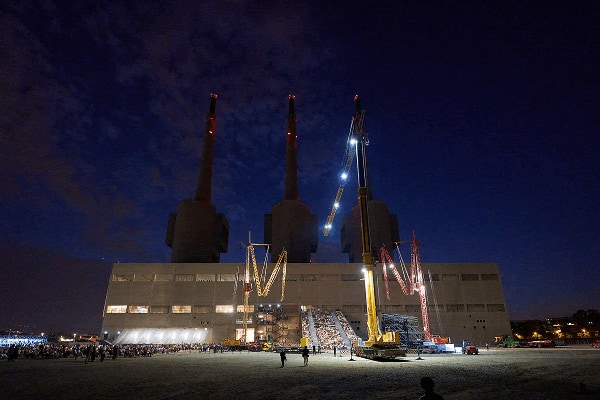
Photo credits: Anna Mas from UIA
Cranes and Champagne: The Metaphor of Reprogramming
The opening evening culminated in a spectacular artistic performance that served as the perfect metaphor for the entire congress.
Instead of a traditional orchestra, the stage was dominated by massive, heavy construction cranes. Operating completely without drivers in their cabins (fully remote-controlled), these industrial giants initially moved in a raw, chaotic fashion, lifting heavy molds and pouring sand.
But as the performance reached its climax, these massive machines—designed for brute force and demolition—executed an action of micro-precision. One of the cranes slowly popped the cork of a champagne bottle, while another held a tray, pouring the liquid into a glass without spilling a single drop. The crane then smoothly lowered the tray directly into the audience, presenting the glass to Sandra Bestraten Castells , Dean of the Architects' College of Catalonia.
For us at XENIOS, this scene is the ultimate manifesto of our daily operations. Our role as "Urban Producers" is to take complex, heavy, and highly bureaucratic systems—whether they are outdated municipal building codes, rigid development budgets, or conflicting stakeholder interests—and carefully calibrate them. We reprogram these brutalist systems to deliver precision, tactical elegance, economic viability, and ultimate comfort for the individual.
The UIA 2026 Congress has only just begun. Ahead lie three days of intense discussions on the circular economy, cutting-edge materials, and global housing policies. We will continue to monitor the panels and share our key strategic insights directly from Barcelona.
Stay tuned for updates from XENIOS Bureau!
#UIA2026 #UrbanStrategy #Barcelona #AdaptiveReuse #Placemaking #TacticalUrbanism #Urbanism #Development